

I used to tell learners and families that our school was a safe place. I stopped saying that, though, because it wasn’t true. No institution or system can guarantee safety because harmful things happen in every learning environment. I’ll share one goal now you can set to make the new year safer for your students and staff.
Your School Isn't Safe—Set One Goal
I’m sorry to be the one to tell you, but your school isn’t safe. Nobody’s is. By acknowledging this truth, you can set aside defensiveness, examine the facts, and set realistic goals with your teams to make your learning environments safer. Keep reading because I’ve got trauma-sensitive tips to help you!
First, make a list of harms in your setting that are priorities for change (consider multiple data sources).
Here’s my starter list of ten things that interfere with safety in many settings:
- Gun violence at school
- Bullying and harassment online or on school grounds
- Racism exhibited by institutional policies or educators acting from biases
- Policies, practices, and behaviors that target LGBTQIA+ educators and youth
- Threats to youth or families based on immigration status
- Harsh, fear-based discipline tactics
- Staff members yelling at kids
- Not enough classroom structure
- Patterns of unsafe bus behavior
- Physical aggression by youth
What else would you add?
Next, choose one harm to prioritize, analyze your baseline data, and set a SMART goal.
Here’s one example for decreasing educator yelling:
By the end of the final grading period, students and staff will indicate that adults at school are raising their voices at least 25% less than they reported on a baseline survey.
"Your school isn't safe. Nobody's is."
—Ms. Jen Tweet
Ready, Set, Go for Change in 5 Steps
While your SMART goal helps your teams get ready for change, it isn’t the only necessary step. It takes preparation and purposeful action to reach any goal. To know if you’re getting there, you’ll want to assess for progress as you go.
For now, consider possible first steps toward meeting your SMART goal.
Here are several that align with the SMART goal above.
- Start by communicating the importance of the goal with your staff. To focus on decreasing yelling, I would reference my explanation in Building Trauma-Sensitive Schools that yelling can be a stress activator. According to the U. S. Department of Justice (2026), sixty percent of youth are exposed to violence or abuse. Reminders of these events at school, like escalated verbals can cause individuals to re-experience the harmful effects of their adverse experiences as if they’re happening again in the present. When it comes to raised voices, this doesn’t only occur when kids are yelled at directly. Even observing someone else being targeted with a raised voice can remind learner (and educator) nervous systems of threatening situations they’ve been in, causing emotional dysregulation and disengagement from learning. Educators have a responsibility to work on not yelling at anyone at school unless it’s a brief, intentional communication strategy used to interrupt imminent danger.
- Next, discuss what contributes to your identified concern—think the why—by naming the need(s) that may be driving it. This step is important; don’t skip it. For yelling, it’s probably not a lack of knowledge that contributes to the concern as much as it’s related to adult stress responses. Let’s be real, teachers are stressed. As you support them, emphasize that educators can maintain high expectations and set limits without raising their voices or turning themselves into passive robots.
- Agree on action steps and carry them out. You may be tempted to jump to consequences and rewards at this point to promote behavior change, but try not to. Focus on meeting identified needs with support. For example, plan to give staff strategies to use instead of yelling in-the-moment. One might be trying to say, “I feel like yelling (or I’m starting to yell) so I’m going to pause and then come back to this.” Or, adults might notice they’re tendency to raise their voice and intentionally whisper while saying they’re angry or frustrated, instead. Adding a self-monitoring plan is an option, too (e.g., staff can make a tally each time they try one of the healthy strategies).
- Also, encourage adults to bring youth into discussions about the issue within their classrooms (if they want to). A teacher could say, “People may raise their voices when they become dysregulated. When someone does this around you, how do you feel? And, how do you feel when you do it to others? I’m hoping this is something we can work on together since it can be upsetting. Let’s develop a nonverbal signal we could give one another when someone starts to raise their voice. This can help us become more aware of what’s getting stirred up inside and signal the need to get regulated.” This shows youth that we are working on ourselves, just like we’re asking them to do—as long as we don’t make it their responsibility to tend to adult emotional needs.
- Finally, monitor progress. Think assessing for progress, making readjustments to your plan when needed, and celebrating wins!
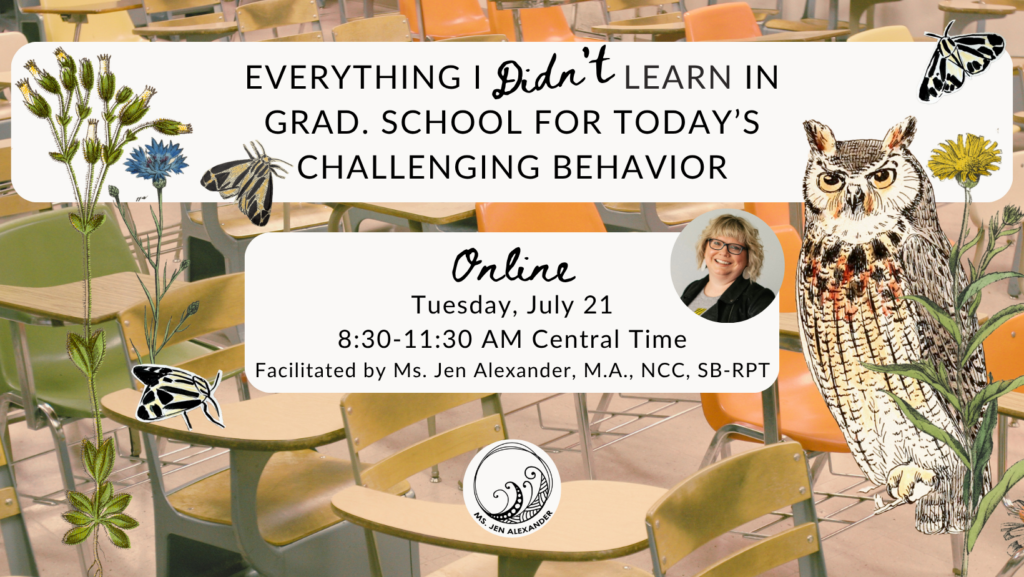
If you’re short on strategies, especially in relation to staff dysregulation, which is a concern with stressed out teachers and paraprofessionals in every school, sign-up for my Tuesday, July 21, 2026 virtual training. We’ll spend three hours in a welcoming setting focused on practical tips any school leader can use to support staff regulation (whether you’re formally in a supervisory role or not). Hint: None of them involve becoming a therapist.
"According to the U. S. Department of Justice, sixty percent of youth are exposed to violence of abuse. Educators have a responsibility to work on not yelling at anyone at school unless it's a brief, intentional communication strategy used to interrupt imminent danger."
—Ms. Jen Tweet
Your Next Steps...
1. Grab my Action Plan Google Doc that includes both a blank version and the example described in this post. To use it for your board, district, or school, first make your own copy of the document. Then make changes if needed, publish, and send to your teams.
2. Read Building Trauma-Sensitive Schools to discover other harms at school that threaten real and felt safety. Or, check out my free leadership guide that gives more school leader tips for creating safe, supportive learning environments.
3. Learn strategies that will help you support educator regulation needs by signing up to attend my virtual workshop Everything I Didn’t Learn in Grad. School for Today’s Challenging Behavior on Tuesday, July 21, 2026.
Take good care,

References
Alexander, J. (2019). Building trauma-sensitive schools: Your guide to creating safe, supportive learning environments. Brookes Publishing Co.
U. S. Department of Justice. (2026, January 20). Children exposed to violence. Office of Justice Programs. https://www.ojp.gov/archive/program/cev